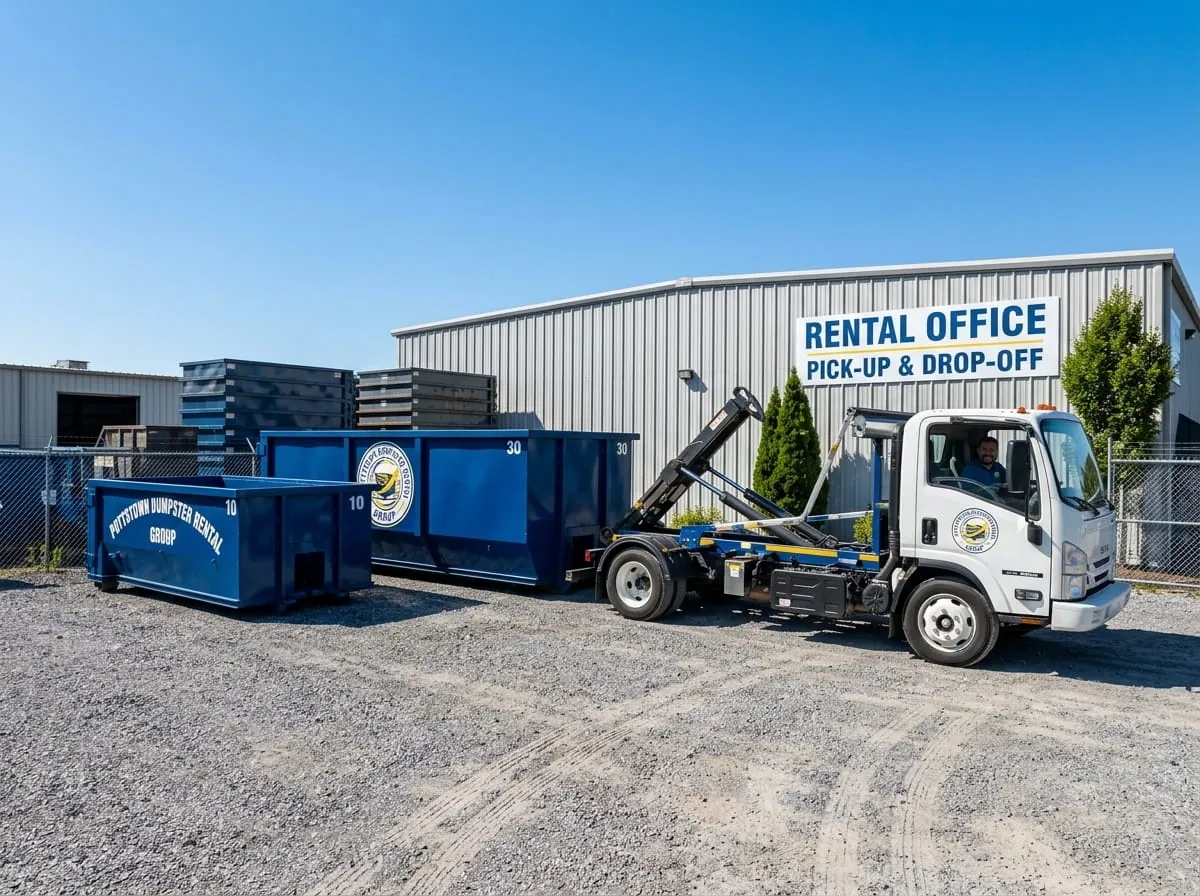
One of the most common questions we hear at Pottstown Dumpster Rental Group is deceptively simple: what can actually go in the dumpster? It matters more than most people expect. Toss the wrong item into a roll-off container and you can trigger overweight fees, contamination charges, a refused pickup, or even a violation under Pennsylvania waste law. The good news is that the rules are straightforward once you know them. This guide walks Pottstown and Montgomery County homeowners, contractors, and DIYers through exactly what belongs in a roll-off dumpster, what needs a dedicated heavy-debris bin, and what the law says you simply cannot throw away this way.
Why Knowing the Rules Saves You Money
Flat-rate dumpster pricing is only truly flat when the container holds the materials it was rented for. Landfills and transfer stations weigh every load and screen it for banned items. When a driver arrives to haul a bin loaded with tires, a refrigerator, or a mountain of wet concrete, one of two things happens: the load gets rejected on the spot, or it goes through with surcharges that land back on your invoice. Sorting your debris correctly from the start protects the flat rate you were quoted and keeps your project on schedule. It also keeps you compliant with the Pennsylvania Department of Environmental Protection regulations that govern what our local facilities are allowed to accept.
There is a safety dimension too. Prohibited items like propane tanks, batteries, and solvents are not just paperwork problems — they can spark fires in the back of a truck or at a transfer station, endangering drivers and staff. Every rule in this guide exists for a practical reason, and following them makes your cleanup smoother, cheaper, and safer for everyone who handles the material after it leaves your property.
What You Can Put in a Roll-Off Dumpster
The vast majority of household, renovation, and cleanout debris is perfectly acceptable. A standard roll-off is designed for bulky, non-hazardous solid waste, and that covers most of what fills a garage, attic, or job site. Here is what we happily take:
- Household junk and clutter — boxes, toys, clothing, packaging, general trash, and years of accumulated garage and basement contents.
- Furniture — couches, mattresses, dressers, tables, chairs, and other bulky items too big for curbside pickup.
- Construction and renovation debris — lumber, wood framing, subfloor, trim, cabinetry, and general demolition material.
- Drywall and plaster — sheetrock scraps, lath, and wall material from remodels and tear-outs.
- Roofing material — asphalt shingles, underlayment, and flashing (ask us about weight limits, since shingles add up fast).
- Yard waste — branches, brush, leaves, sod, and general landscaping trimmings.
If your project is a whole-house cleanout, an estate clearing, or a garage overhaul rather than a construction job, a container is still the right tool. You can also pair it with our junk removal service when you would rather have a crew do the lifting and loading for you.
Heavy Materials Need Their Own Bin
Weight is where a lot of well-intentioned projects go sideways. Dense debris can hit a container's weight limit while the bin still looks half empty, and overloaded roll-offs are unsafe to haul and often illegal on the road. Certain materials should never go in a standard mixed-debris dumpster:
Concrete, Brick, Block, and Dirt
Concrete, brick, cinder block, stone, asphalt, and clean fill dirt are extraordinarily heavy. A small pile can weigh as much as an entire container of household junk. Because of this, these materials require a dedicated heavy-debris bin sized and rated specifically for the load. Keeping them separate also matters for recycling: clean concrete and brick can be crushed and reused as aggregate, but only when they are not mixed with wood, trash, or drywall. If your project involves a demolished patio, an old foundation, a driveway tear-out, or excavated soil, ask us about our concrete and heavy debris containers before you start loading. It is the single easiest way to avoid an overweight surprise.
What You Cannot Put in a Dumpster
Some items are prohibited no matter the size of your project, because they are hazardous, flammable, environmentally harmful, or banned outright by state and federal law. These are the materials that get a load rejected. Keep the following out of every roll-off container:
- Hazardous waste — solvents, pesticides, herbicides, pool chemicals, and any labeled corrosive, flammable, or toxic product.
- Wet paint and stains — liquid paint is banned; latex paint must be dried out solid or handled through a paint recycling program first.
- Tires — car and truck tires are not accepted at landfills and require a dedicated tire recycler.
- Batteries — car batteries, lithium-ion packs, and rechargeables all need proper recycling, not the trash.
- Appliances with Freon — refrigerators, freezers, air conditioners, and dehumidifiers must have refrigerant professionally removed first.
- Electronics and e-waste — TVs, monitors, computers, and printers are landfill-banned in Pennsylvania (more on this below).
- Chemicals and fluids — motor oil, antifreeze, gasoline, propane tanks, and other automotive or fuel products.
- Asbestos and medical waste — both require specialized, licensed handling and disposal.
When you are unsure about a specific item, the safest move is to ask before it goes in the bin. A quick call to (610) 819-7093 can save you a rejected pickup and a return trip.
Pennsylvania Rules Every Pottstown Resident Should Know
Pennsylvania has some of the clearest disposal bans in the region, and a few of them directly affect what you can put in a dumpster in Montgomery County.
The Covered Device Recycling Act (E-Waste Ban)
Under Pennsylvania's Covered Device Recycling Act, it is illegal to dispose of most consumer electronics in landfills — which means they cannot go in your roll-off. This covers televisions, desktop and laptop computers, monitors, tablets, and e-readers. These devices must be routed to an approved e-waste recycler instead. Montgomery County runs electronics recycling events and drop-off options throughout the year for exactly this purpose, so plan to set your old TVs and computers aside rather than tossing them.
Appliances and Freon
Federal law prohibits releasing refrigerant into the atmosphere, so any appliance containing Freon — refrigerators, freezers, window and central air conditioners, and dehumidifiers — must have that refrigerant recovered by a certified technician before disposal. Once an appliance is certified Freon-free and tagged, it can often be recycled as scrap metal. Our team can point you toward the right handling so these units never contaminate your container.
Renovating an Older Pottstown Home? Plan Ahead
Pottstown's housing stock includes many homes built well before modern building codes, and older-home renovations come with debris that deserves extra caution. Materials from homes built before the late 1970s and 1980s can contain lead paint and, in some cases, asbestos in old floor tile, insulation, pipe wrap, and siding. Asbestos-containing material is never dumpster-safe and must be tested and abated by a licensed contractor. Lead-painted debris also has special handling requirements. Beyond the hazards, older renovations tend to generate a heavy mix of plaster, lath, brick, and dense flooring, so it is worth planning your container strategy before demolition day.
The simplest approach is to separate your waste streams from the start: one bin for clean construction and household debris, a dedicated heavy-debris bin for concrete and masonry, and a staging area for the restricted items — electronics, appliances, tires, chemicals, and paint — that need specialized recycling. Sort it right and your flat-rate rental stays flat, your pickup goes through clean, and your project finishes on time. If you are not sure how to split a mixed load, we will walk you through it before your bin is even delivered.
It also helps to think about container size and placement up front. A renovation that generates dense plaster and brick fills faster and heavier than a garage cleanout of light household junk, so the right size prevents both overloading and paying for space you do not use. Give us a quick description of your project — the age of the home, the type of debris, and roughly how much of it there is — and we will recommend a container and a plan that fits. A five-minute conversation at the start almost always beats a rejected load or an overweight fee at the end.
Ready to book the right dumpster for your project? Call Pottstown Dumpster Rental Group at (610) 819-7093 for fast, flat-rate service across Pottstown and Montgomery County, or reach us through our contact page and we will help you match the perfect container to your debris.
Founder, Pottstown Dumpster Rental Group — sharing straight advice from more than 15 years of local hauling experience.